Showing posts with label Education. Show all posts

2023/08/22

Unleashing Cybersecurity Skills: The World of Capture The Flag (CTF)

In the realm of cybersecurity, there's a game that isn't just about fun, but also about learning, challenges, and honing your hacking skills. It's called Capture The Flag (CTF). 

In this article, we'll delve into what CTF is, how it works, and why it's a crucial training ground for aspiring cybersecurity professionals.

1. Understanding Capture The Flag (CTF)

Capture The Flag (CTF) is a cybersecurity competition that simulates real-world hacking scenarios. Participants solve puzzles, decode messages, exploit vulnerabilities, and ultimately retrieve hidden "flags" to earn points. Flags are unique strings that prove a challenge's completion.

Image: A visual representation of a CTF flag being captured

2. Categories of CTF Challenges

CTF challenges are divided into distinct categories, mirroring the diverse aspects of cybersecurity:

Image: 6 common categories of Cyber Battle: Capture The Flag

2.1 Cryptography:

Cryptography challenges involve deciphering encoded messages, cracking codes, and understanding encryption techniques. You'll encounter various types of cyphers, substitution methods, and algorithms. Participants often need to apply analytical and mathematical thinking to break the encryption.

2.2 Web Security:

Web security challenges are focused on identifying and exploiting vulnerabilities present in web applications. These challenges mimic real-world scenarios where hackers attempt to bypass security mechanisms, execute code injection, or manipulate URLs to gain unauthorized access. 

2.3 Forensics:

Forensics challenges involve analyzing digital artefacts, logs, and files to extract hidden information. Participants may recover deleted files, decipher hidden messages in images, or reverse-engineer malware to understand its behaviour. These challenges test your attention to detail and analytical skills.

2.4 Reverse Engineering:

Reverse engineering challenges require participants to dissect compiled programs or binaries to understand their functionality. You'll explore executable files, disassemble code, and identify vulnerabilities. This category is particularly useful for understanding how malware operates.

2.5 Binary Exploitation:

Binary exploitation challenges involve exploiting vulnerabilities in compiled programs. Participants find ways to manipulate input data to trigger buffer overflows, code execution, or privilege escalation. This category focuses on understanding software vulnerabilities and crafting exploits.

2.6 Network Analysis:

Network analysis challenges focus on analyzing network traffic to uncover vulnerabilities or hidden information. You might examine packet captures, identify potential security flaws, and reconstruct network activities to understand their implications.

3. How Does CTF Work?

CTF participants engage in a variety of challenges:

3.1 Challenge Discovery

Participants select and tackle challenges based on their expertise. (You can refer to heading 2 "Categories of CTF Challenges").

3.2 Problem-Solving 

Image: Cyber Battle participants Source: itpss.com

Once participants choose a challenge category, they dive into solving challenges within that domain.

These challenges simulate real-world scenarios and require participants to:
  • Analyze Code: Examine source code, binaries, or other files for vulnerabilities and hidden information.
  • Reverse Engineer: Disassemble and understand the inner workings of compiled programs.
  • Decipher: Decode encrypted messages, cyphers, and codes using cryptography principles.
  • Examine Artifacts: Analyze digital artefacts like images, logs, or packet captures to extract relevant information.
Challenges require diverse skills, from coding to cryptography.

3.3 Flag Retrieval 

Solving a challenge leads to the discovery of a "flag," a unique piece of text that confirms successful completion. 

Flags are often in the format of alphanumeric strings. They're usually embedded within challenge files, hidden in code, or even transmitted within network packets.

3.4 Scoring

Image: Scoreboard sample of Cyber Battle: Capture The Flag, Source: haxf4rall.com 


For every successfully retrieved flag, participants earn points. The difficulty of the challenge determines the number of points awarded. 

Complex challenges with intricate solutions yield higher points. The participant or team with the most points wins the competition.

4. Importance of CTF Competitions

Capture The Flag (CTF) competitions are more than just challenges; they provide a rich learning experience and numerous benefits that contribute to personal and professional growth. 

Here's an in-depth exploration of the importance of CTF competitions:

4.1 Skill Enhancement and Practical Application:
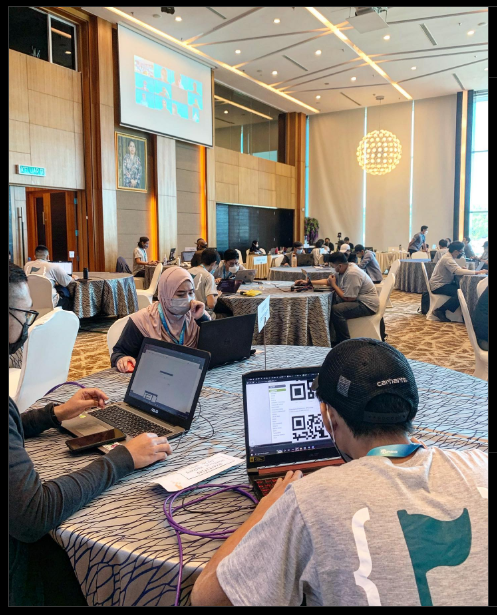
Image: Participants of the Cyber Battle: Capture The Flag. Source: BruCert instagram

CTF challenges mirror real-world cybersecurity scenarios. By actively participating in challenges across various domains, participants enhance their technical skills and apply theoretical knowledge to practical situations. These experiences equip individuals with the ability to identify vulnerabilities, develop exploits, and defend against attacks.

4.2 Problem-Solving and Critical Thinking:


Image: Brainstorming session. Source: wework.com

Each CTF challenge presents a unique puzzle that requires analytical thinking, creativity, and problem-solving skills. Participants learn to dissect complex problems, break them down into manageable components, and develop systematic approaches to find solutions. This cultivates a mindset that's essential for tackling intricate cybersecurity challenges.

4.3 Exposure to Diverse Domains:

Image: Representation of diverse into cybersecurity domains. Source: evelynlim.com

CTF competitions cover a broad spectrum of cybersecurity domains, including cryptography, web security, forensics, and more. This exposure allows participants to explore different areas of interest and expertise. It encourages them to become well-rounded cybersecurity professionals with versatile skill sets.

4.4 Hands-On Learning and Active Participation:

Image: photo of 2016’s Cyber Battle: Capture The Flag competition, Source: itpss.com

Traditional learning methods are valuable, but CTF competitions offer a hands-on and immersive learning experience. Participants actively engage with challenges, experiment with tools, and observe immediate outcomes. This hands-on learning approach accelerates skill development and knowledge retention.

4.5 Teamwork and Collaboration:

Image: representing teamwork and collaboration. Source: quietrev.com

Many CTF competitions emphasize teamwork, fostering collaboration and communication among participants. Joining or forming teams allows individuals to share insights, strategies, and solutions. Collaborative efforts mirror real-world cybersecurity operations, where a diverse skill set is essential for success.

4.6 Competitive Spirit and Motivation:

CTF competitions add an element of competition that fuels motivation. Participants strive to earn points, solve challenges, and achieve a high rank on leaderboards. This competitive spirit drives individuals to continuously improve their skills, explore new techniques, and push their boundaries.

5. Preparing for CTF Success

Successfully participating in CTF competitions requires a combination of knowledge, skills, and strategies. Here's a detailed breakdown of how to prepare effectively:

5.1 Learn Key Concepts

  1. Cryptography: Familiarize yourself with encryption algorithms, decryption methods, and common cryptographic attacks.
  2. Web Security: Understand web vulnerabilities like SQL injection, cross-site scripting (XSS), and request forgery.
  3. Forensics: Learn techniques to analyze digital artefacts, recover deleted data, and reconstruct events.
  4. Reverse Engineering: Study assembly language and understand how to reverse-engineer compiled programs.
  5. Binary Exploitation: Learn about buffer overflows, format string vulnerabilities, and binary analysis.
  6. Network Analysis: Gain insights into network protocols, packet capture analysis, and network attacks.

5.2 Practice Regularly

  1. CTF Platforms: Explore CTF platforms like PicoCTF, Hack The BoxTryHackMe and PentesterLab Engage with challenges of varying difficulty levels to improve your skills.
  2. Wargames: Participate in cybersecurity wargames that simulate real-world scenarios and test your problem-solving abilities.
  3. Online Tutorials: Follow online tutorials that cover CTF-related topics and provide step-by-step guidance on solving challenges.

5.3 Joining Communities

  1. CTF Forums: Participate in CTF forums and communities to connect with like-minded individuals, ask questions, and share insights.
  2. Online Platforms: Join CTF-related Discord servers, Reddit communities, and social media groups to stay updated and interact with experts.

5.4 Team Collaboration

  1. Team Formation: Consider forming or joining a CTF team. Diverse skills and expertise within a team can enhance problem-solving and strategy development.
  2. Knowledge Sharing: Collaborate with team members to share insights, solutions, and tactics for tackling challenges effectively.

Stay Updated with Trends

  1. Cybersecurity News: Follow cybersecurity news, blogs, and websites to stay informed about the latest vulnerabilities, techniques, and trends.
  2. CTF Write-Ups: Read CTF write-ups and walkthroughs to understand different solution approaches and expand your toolkit.

Embrace the CTF Journey

Image: Top 3 teams of Cyber Battle: Capture The Flag 2016 Source: itpss.com

In the realm of cybersecurity, Capture The Flag (CTF) competitions emerge as a transformative journey that transcends traditional learning approaches. The path to becoming a proficient cybersecurity professional involves more than textbooks and theoretical knowledge—it's about immersing oneself in practical challenges, fostering problem-solving abilities, and embracing a community of like-minded enthusiasts.

CTF competitions provide a gateway to skill refinement, critical thinking, and continuous learning. As you navigate through various challenges—deciphering cryptographic puzzles, analyzing network traffic, dissecting binaries, and more—you embark on a journey of cybersecurity mastery. Every challenge solved, and every flag captured, contributes to your growth and expertise.

But it's not just about individual achievement. CTF thrives on collaboration and teamwork, reflecting the collaborative nature of cybersecurity operations in the real world. Forming teams, exchanging insights, and collectively unravelling complex challenges fosters camaraderie and mutual growth.

As you prepare, practice, and engage in CTF competitions, you're not just preparing for a challenge; you're preparing to contribute to a field that's critical to our digital landscape. Your efforts in understanding vulnerabilities, refining solutions, and fortifying defences are essential to safeguarding digital environments and information.

So, whether you're a newcomer intrigued by the world of cybersecurity or a seasoned professional seeking to expand your horizons, embrace CTF as a dynamic avenue of growth. With each challenge, you're not only capturing flags but also capturing opportunities to sharpen your skills, collaborate with peers, and contribute to the ever-evolving landscape of cybersecurity.

As you embark on this journey of mastering the art of CTF, remember that the thrill of solving challenges and capturing flags is matched only by the satisfaction of becoming a stronger and more adept cybersecurity practitioner. Let the flags you capture become badges of honour in your pursuit of excellence in the fascinating realm of cybersecurity.

Image: Reaching the summit. Source: zermatt.ch

May your journey through CTF competitions be exhilarating, enlightening, and transformative—a voyage that shapes not just your skills but also your perspective on the intricate dance between technology and security.

With flags in hand and knowledge at heart, venture forth on your path of cybersecurity discovery. The world of CTF awaits your exploration and contribution.

2023/08/16

Exploring Software Architecture: Microarchitecture vs. Standard Architecture

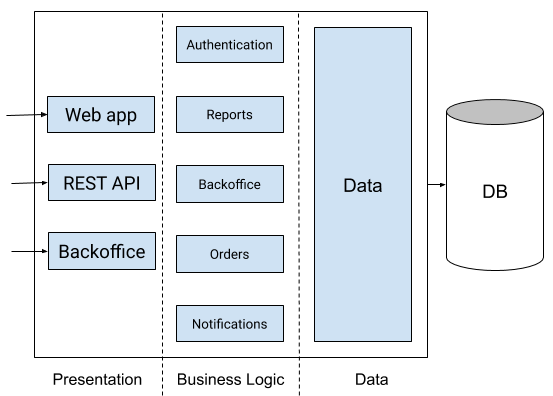
Software architecture serves as the foundation for any software application, determining its structure, scalability, and maintainability. Two prominent approaches to software architecture are microarchitecture (also known as microservices architecture) and standard architecture (monolithic architecture)

In this article, we'll explore the intricacies of each approach and highlight their key differences.

Microarchitecture:

Microarchitecture, often referred to as microservices architecture, is a design approach that emphasizes breaking down an application into smaller, loosely coupled services. Each service handles a specific functionality and communicates with other services via well-defined APIs.

Microarchitecture Illustration


Advantages of Microarchitecture:

  • Scalability: Microarchitecture allows services to scale independently, accommodating varying levels of demand for different parts of the application.
  • Flexibility: Each service can use different technologies and programming languages, enabling the use of the best tool for each task.
  • Modularity: Services can be developed, tested, and deployed independently, facilitating continuous delivery and updates.

Challenges of Microarchitecture:

  • Complexity: Managing multiple services can lead to increased complexity, requiring robust monitoring and management tools.
  • Network Communication: Services communicate over a network, which may introduce latency compared to in-process communication.

Standard Architecture (Monolithic):

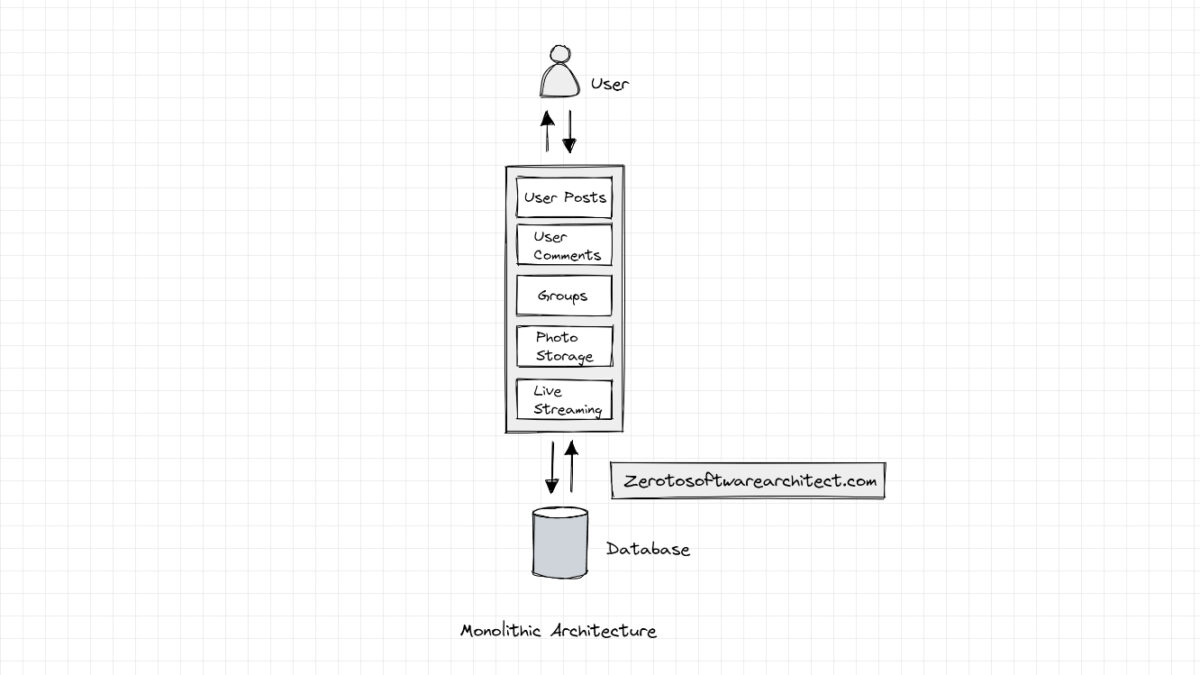
Standard architecture, often referred to as monolithic architecture, involves building an application as a single, self-contained unit. All components of the application are tightly integrated and run within the same process.


Standard Architecture Illustration


Image: An illustration of monolithic architecture. Source: Monolithic Architecture Simplified - Scaleyourapp

Advantages of Standard Architecture:

  • Simplicity: Monolithic applications are often simpler to develop, test, and deploy due to their cohesive nature.
  • Single Deployment: Since the entire application is deployed together, managing deployment is relatively straightforward.

Challenges of Standard Architecture:

  • Scalability: Scaling a monolithic application usually involves scaling the entire application, even if only a specific component requires more resources.
  • Technology Lock-in: All components of the application must use the same technology stack, limiting flexibility.

Choosing the Right Approach

The choice between microarchitecture and standard architecture depends on the project's requirements and goals. Microarchitecture is suitable for complex projects that demand scalability, flexibility, and independent deployment. On the other hand, standard architecture is preferable for smaller projects with simplicity and easier deployment as priorities.

To conclude whether you opt for microarchitecture or standard architecture, understanding the differences between the two will help you make informed decisions about designing and building your software application. Consider the project's scale, complexity, and long-term goals to select the architecture that aligns best with your needs.

2015/06/17

Be Productive While Fasting During Ramadan

Ramadan Legacy - A Worlds First fully-featured app for Ramadan
Photo courtesy from ramadanlegacy.com
Fasting is coming in really close now. How time flies. Are you prepared for it? How about we add a little bit of IT in it. Let us introduce to you, Ramadan Legacy.

2014/12/18

Play Games While Learning to Code

There are a lot of online resources out there that teaches you to code or program. Here at Anak IT, we strive to make this learning experience fun and unique to everyone striving to be next best programmer or coder. So instead of struggling with textbooks, here are some online resources that teaches you to learn how to code while at the same time, play some games!

CodeCombat

Ever feel like swinging a sword or blocking with a shield with coding? You could if you played CodeCombat. This game teaches you Javascript, Coffeescript, Python, and a few other languages (currently at time of writing, still experimental). Your goal is predetermined by each dungeon. It’s free to play and learn!
Learn to code by playing codecombat at CodeCombat.com

Bonus: If you’re an expert already, you can create custom levels and design if you join their github project here. It uses CoffeeScript by the way.

Screeps

This one is new and upcoming on indiegogo. It is an MMO Strategy game but with less mouse-clicking and keyboard shortcuts, and more scripting with Javascript. Check out the video below

The simulation game was awesome. You may need some level of understanding with Object Orient Programming and Arrays before attempting to play this game but fun nonetheless! Feeling strategic? Support the project by contributing some funds for their game project and let’s play!

Hack ‘n’ Slash game

Lastly, there’s a game that plays quite similar to the Legend of Zelda world. But instead in this world, you can change… things. Like the behavior of each game element and object, the attributes, the stats, the modes, and much more! It doesn’t really teach you to code but you might be able to grasp the understanding of game elements through this game of what each asset can do if you change its state.


2014/12/11

Join Innovation Day 2014!

It is December, the perfect month to enjoy, take a vacation, kick-back and relax from our ever so busy lives. But guess what? Anak IT has been brewin' up an event that you might be interested in. In our efforts to introduce technology, programming and scripting to everyone, especially in Brunei, we are hosting Hour Of Code event, at iCentre. Check out our poster below:


Interested? Come and join us! Too busy? Ask your friends and family to take over for ya! Did I mention that you'll get some prizes to win if you attend? I think I didn't. Yes, there's prizes. Come down this weekend and expand your coding skills with creative games and apps and exploration in the world of programming, coding and audio mixmastering.

The event starts at 9am, this Saturday (13/12/2014) until 6pm. Help us spread the word!

2010/12/10

Green IT Certification


"CompTIA's Strata Green IT certificate is designed to enhance an IT professional's experience, knowledge, and existing IT credentials to incorporate emerging technologies shaping the global green IT industry today. IT professionals that pass the Green IT exam validate that they have the aptitude needed to effectively implement and measure green IT programs and investments, including:
  • A specialized knowledge of current IT methodologies
  • The ability to develop, deploy, and calculate true ROI for green IT initiatives
  • Knowledge of cost-cutting power management and IT virtualization techniques
  • Proven understanding of environmentally-sound waste disposal
  • An awareness of global organizations mandating standards and regulations
The Strata Green IT certificate is ideal for IT professionals who have decision making authority over a company's IT infrastructure or work in implementing green IT initiatives such as an IT manager, data center or facilities / operations manager, IT technician, and system or network administrator." -CompTIA

CompTIA Strata - Green IT certificate

For further information on the CompTIA Strata - Green IT, go to CompTIA's website at http://www.comptia.org/certifications/strata/greenit.aspx or simply click here. Those who need some guidance on the certification, you may approach me.
As Anak IT's motto, "Mun rotan ganya sejangkal, jangan mendaluh lautan dalam" encouraging you to improve and further your skills.
Sekian, semoga biskita mendapat inspirasi dan juga manfaat. Wassalam.

"When there is a will, there is a way"

Related articles:

2010/10/10

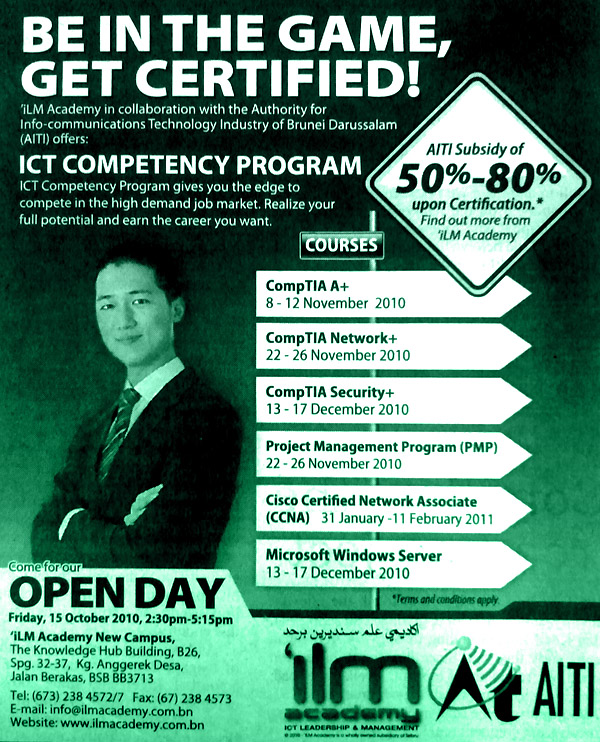
ICT Competency Program - Government Subsidised


"The Authority for Info-Communications Technology Industry of Brunei Darussalam (AITI) will subsidise training for Bruneians and permanent residents on ICT basics and more advanced courses as it signed yesterday deals with three local ICT companies hired to conduct the training.
ICT awarded the contracts to AT e-Knowledge Solution, HAD Technologies Sdn Bhd and iLM Academy following a signing ceremony at the agency's office in Berakas yesterday.
The training is under AITI's ICT Competency Programme aimed at training Brunei's citizens on ICT basics, multimedia applications and other ICT-related skills in order to create a pool of highly skilled manpower and ultimately ensure Brunei's human resource is well-versed in ICT. The programme also aims to upgrade the knowledge of ICT experts.
Under the ICT Competency Programme, AITI will be subsidising 50 per cent to 80 per cent of the training fees of eligible participants, subject to the training course taken. The subsidies will be provided upon successful completion of the course.
AITI is targeting job seekers without ICT skills for the training."
Read further... (The Brunei Times)

2010/03/21

Where is TechTV? Dead?


Have you ever heard of "TechTV"? Yes? No? Well it WAS actually a TV program featuring news, tutorials, tips regarding technology. When I was still "young" (hahaha about mmm 10 years ago?), TechTV was the MUST-SEE channel in my list (Well other than AnimeS like Gensomaden Saiyuki and others on that time hahha KLASIK! Not to mention SlamDunk or even Cooking Master<laugh>Gyahgyahgyahgyah</laugh>). If i'm not mistaken, it was on Astro's channel 14. From TechTV, I've learnt new things regarding technologies and got some useful tips on computing. It was like an "edutainment" for me and unfortunately... It is now "dead"... You may read further facts on TechTV here.
The TechTV show hosted by Chris Pirillo
However, the former TechTV's popular host; Chris Pirillo, is still active doing informal tutorials on youtube and so I still have a place to watch "a-little-bit-similar" of TechTV show hahaha and yes he is a GEEK.
Would you believe Chris Pirillo was on Anak IT? <laugh>Bwuahuwhuahwa</laugh>
Anyway, for those who would like to watch his news, tutorials and thoughts on computing technology, you may proceed here. Hopefully you will get more knowledge on ICT from him. Alright then... Until next time~
P/S: I wonder if ada local Bruneian yang mau buat program cemani but in "Bruneian" way... But still... Our local people would rather watch Astro rather than their own local TV channel... *sigh*

2010/02/27

e-Resources @ MOE


Assalamu'alaikum wbt...
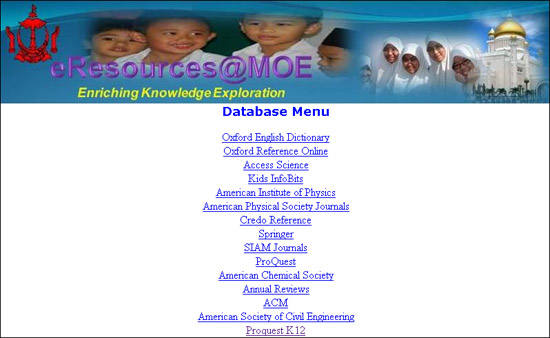
Today I would like to share with pembaca Anak IT pasal eResources kepunyaan Kementerian Pendidikan, Negara Brunei Darussalam atau lebih dikenali dengan eResources@MOE. Ianya adalah satu "portal" untuk mencari bahan-bahan pendidikan secara online seperti e-kamus, e-learning dan sebagainya. It is actually good for students yang malar memakai kamus atue or for those yang suka membaca dan menimba ilmu pengetahuan. For those yang interested, you may go to http://eresources.moe.edu.bn/ or click here.
eResources@MOE's main page
Ramai urang betanyakan pasal barang ani. They said "cemana kan access tue jul? mesti jua ada password nya tue..." and here I would like to share the account created for public which has been given to me by Pegawai Pelajaran dari Kementerian Pendidikan sendiri. The account is:
Username: eresources
Password: sekolah
Type in the Username and Password
And walaaa~ you are now accessing the MOE's eResources. I think that some of the links requires you to pay for the service if you access their site directly (as in bukan dari eResources@MOE). That is what I heard but I am not that sure as well.
Resources provided by eResources@MOE:
  • Oxford English Dictionary<
  • Oxford Reference Online
  • Access Science
  • Kids InfoBits
  • American Institute of Physics
  • American Physical Society Journals
  • Credo Reference<
  • Springer
  • SIAM Journals
  • ProQuest
  • American Chemical Society
  • Annual Reviews
  • ACM
  • American Society of Civil Engineering
  • Proquest K12
So here it goes, free educational resources provided by our beloved government. Browse it while you can bak kata pepatah, "ilmu pelita hidup" dan juga "usaha tangga kejayaan". Sekian terima kasih.